

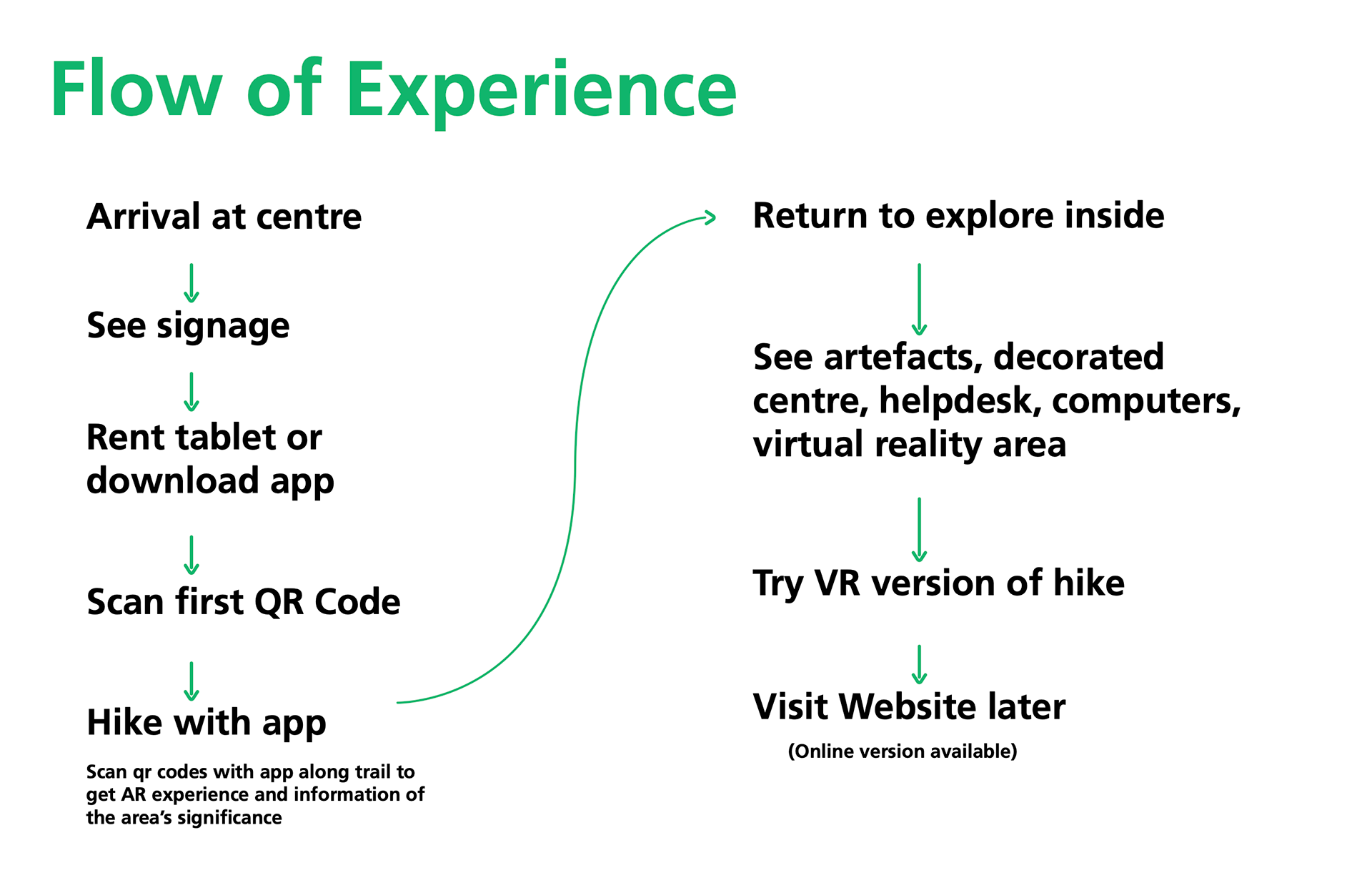
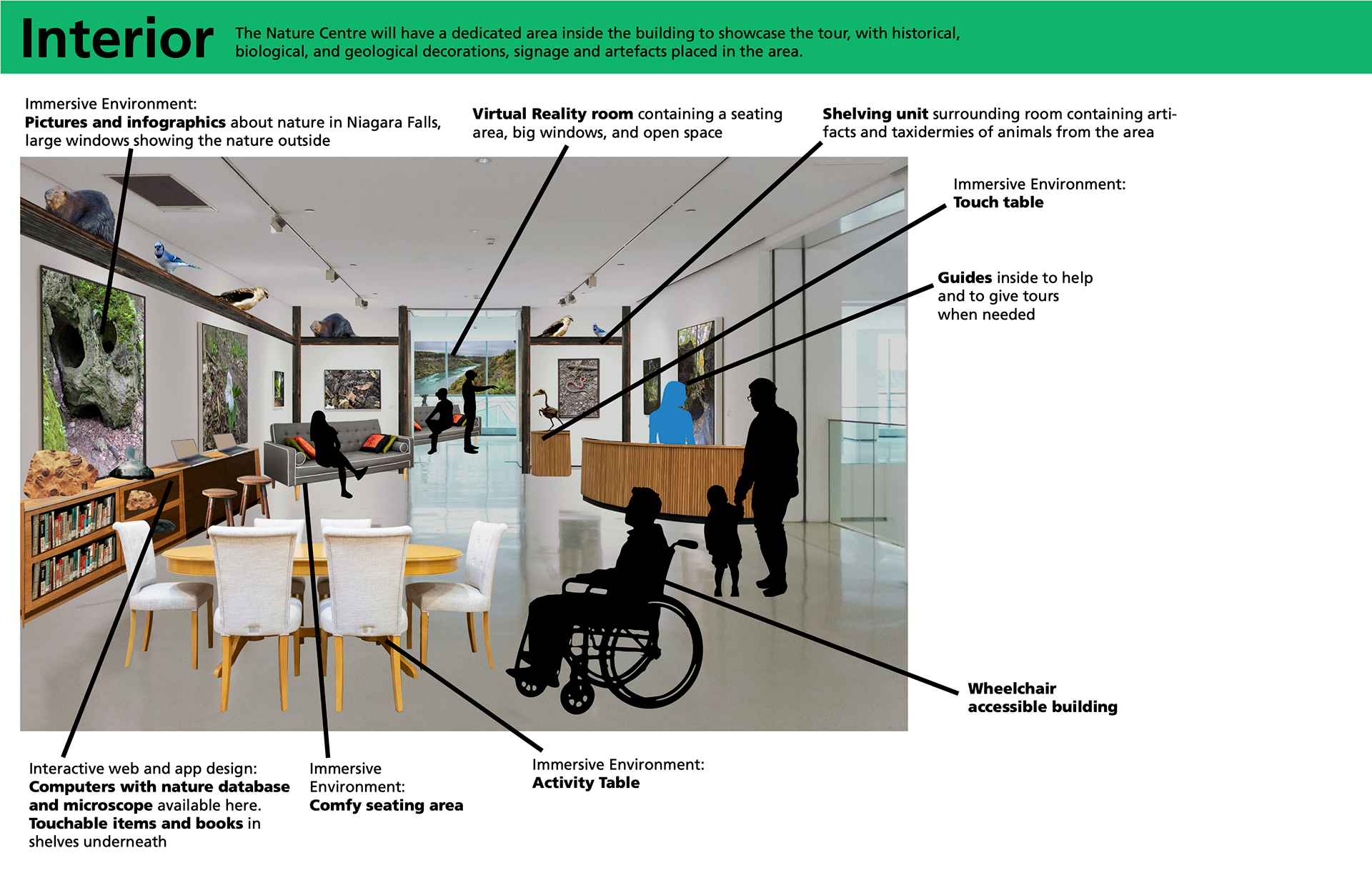
Interior Tour Space (Nature Centre)
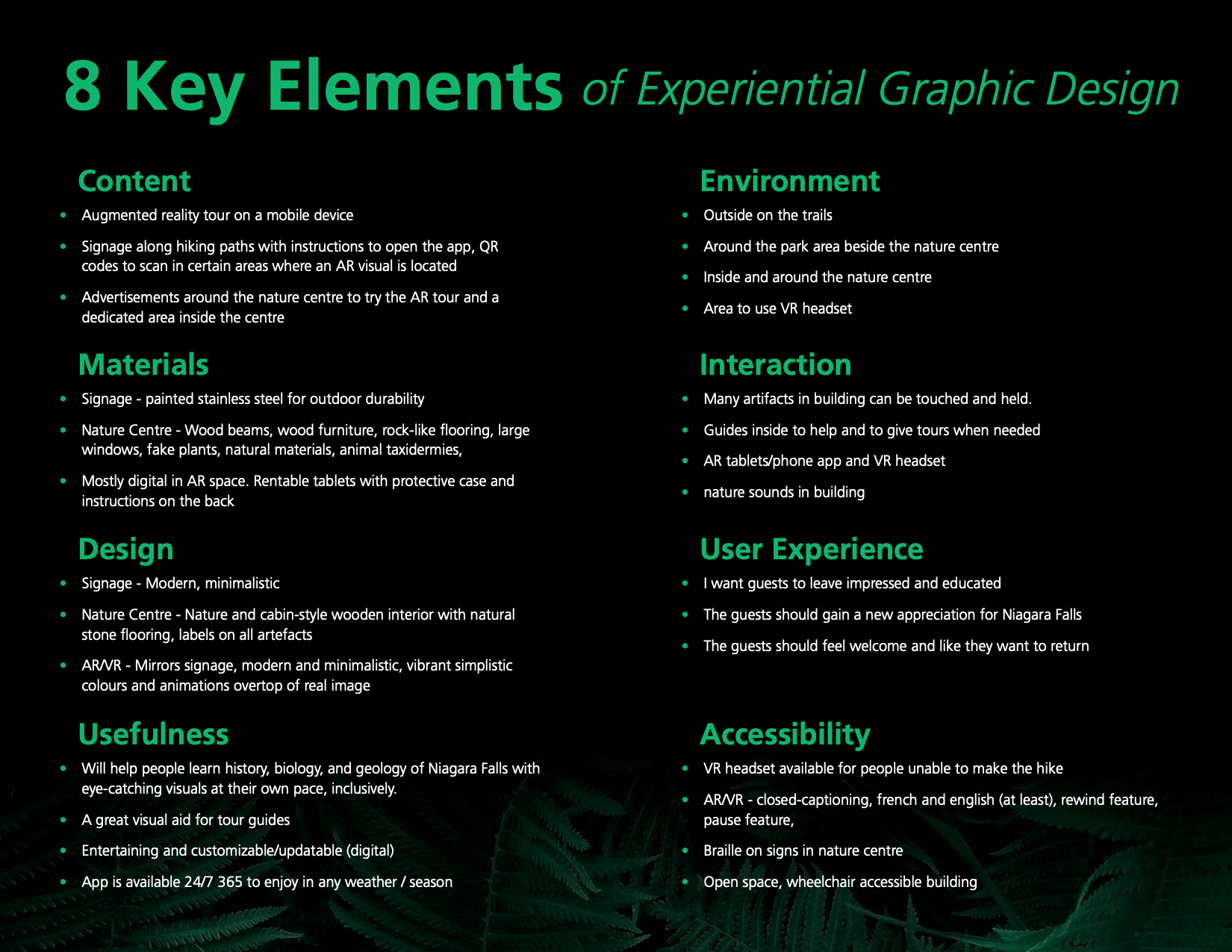
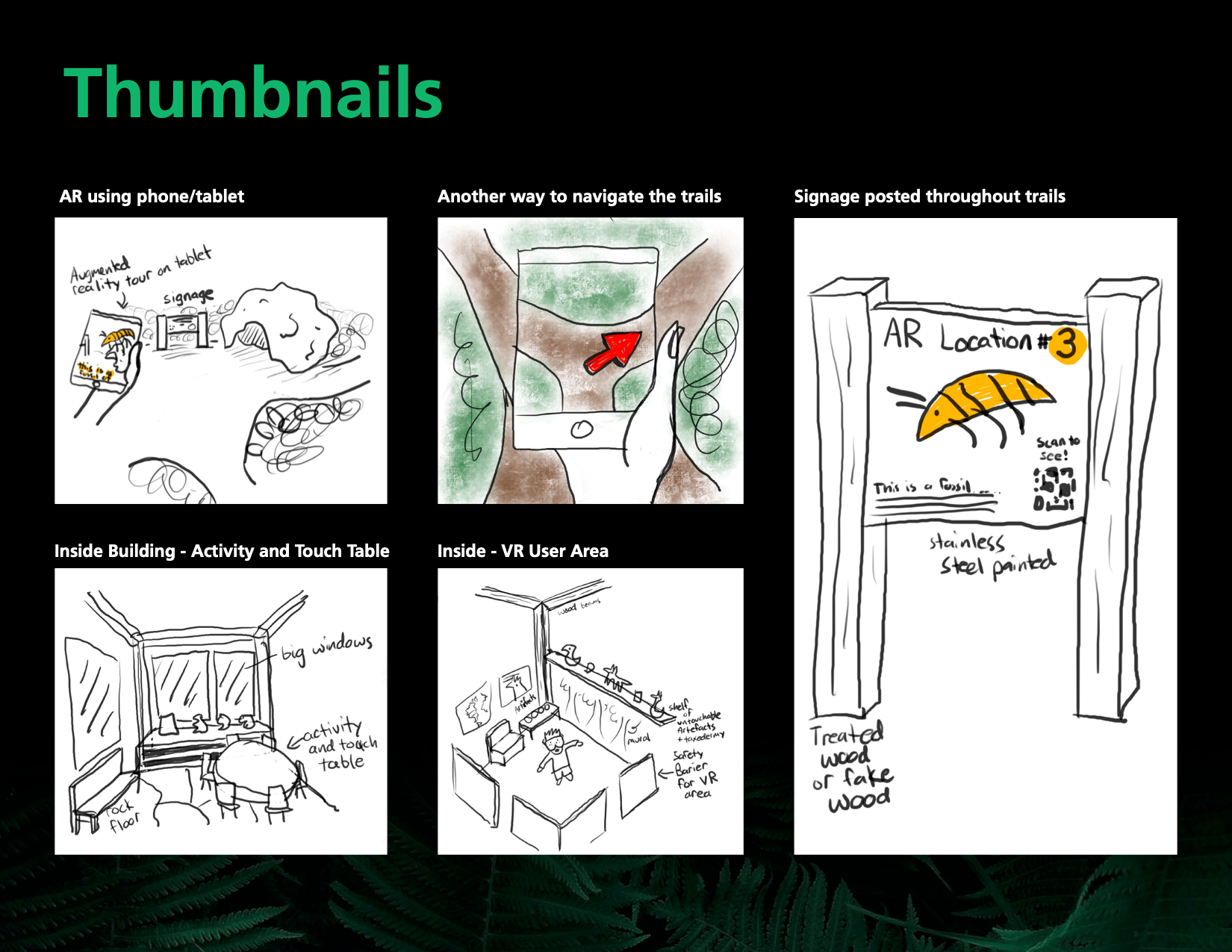
A closer look at the redesigned Nature Centre interior, featuring hands-on displays, pictures and infographics, guides, natural materials, and a dedicated VR area for guests of all abilities.
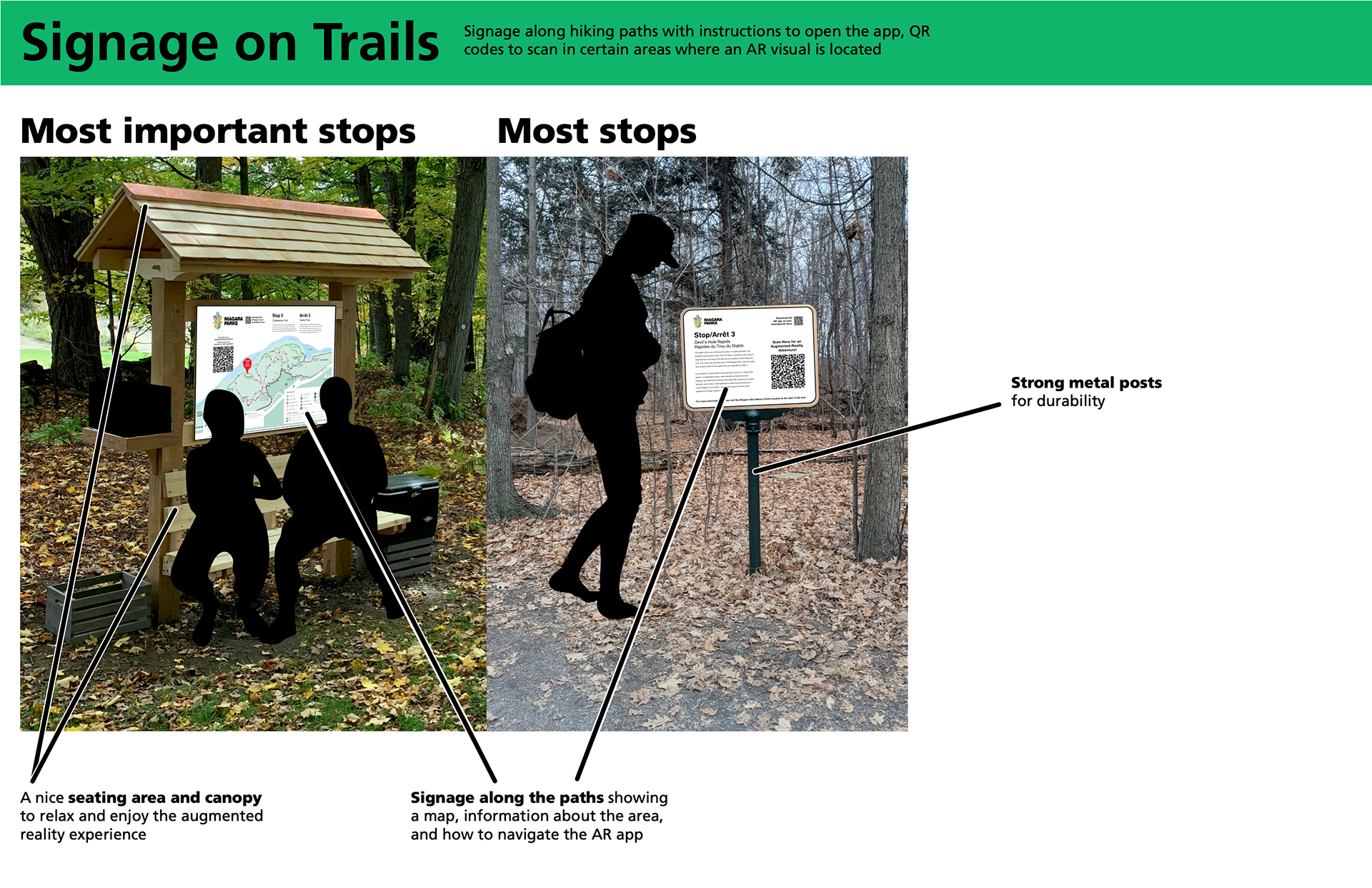
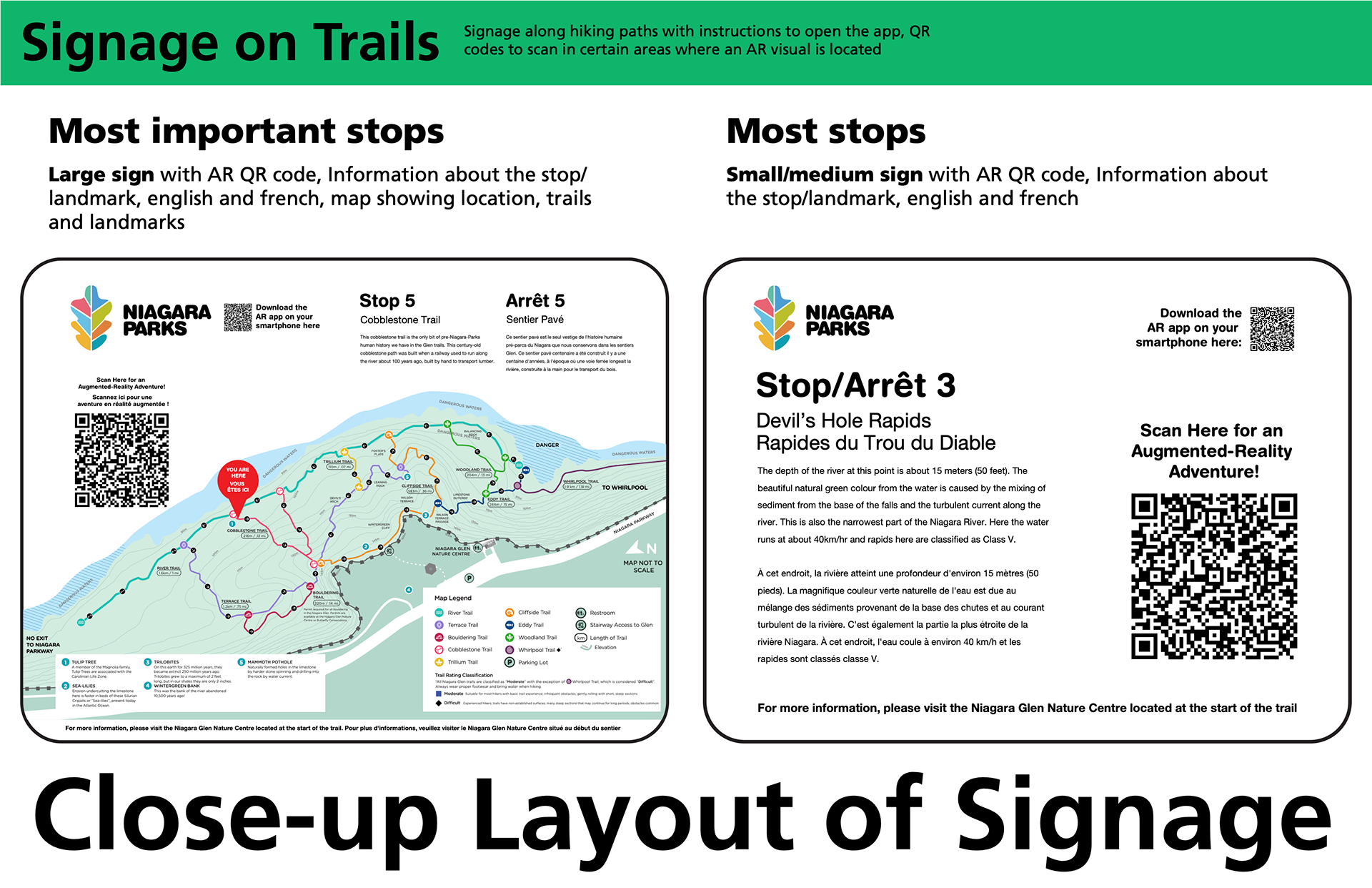
Trail Signage Design
Overview and close-up of signage that guides users through the AR tour. Durable outdoor materials are paired with a minimal, modern design that blends into the environment while remaining legible.
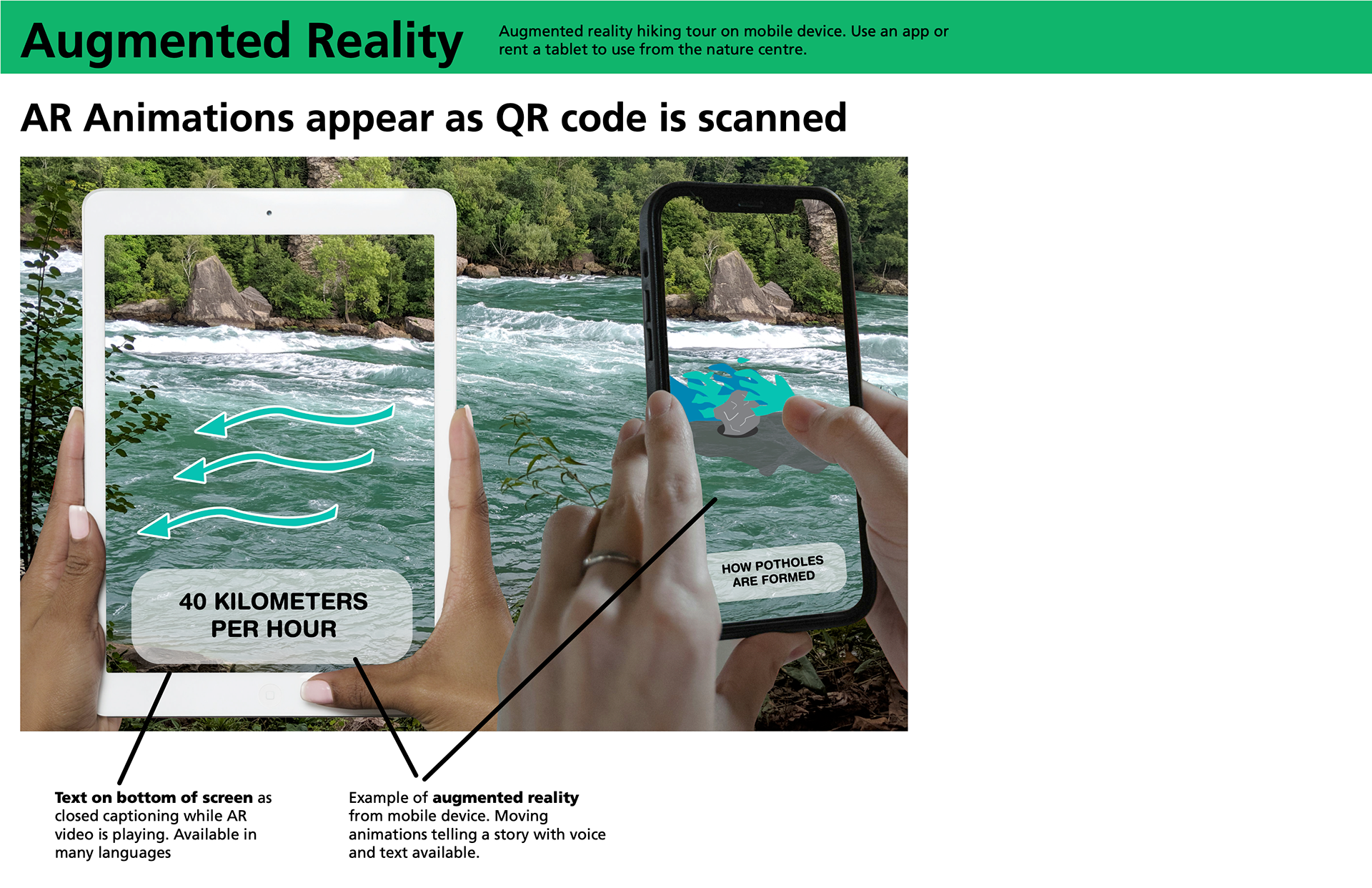
AR in Use: Scanning for Animation
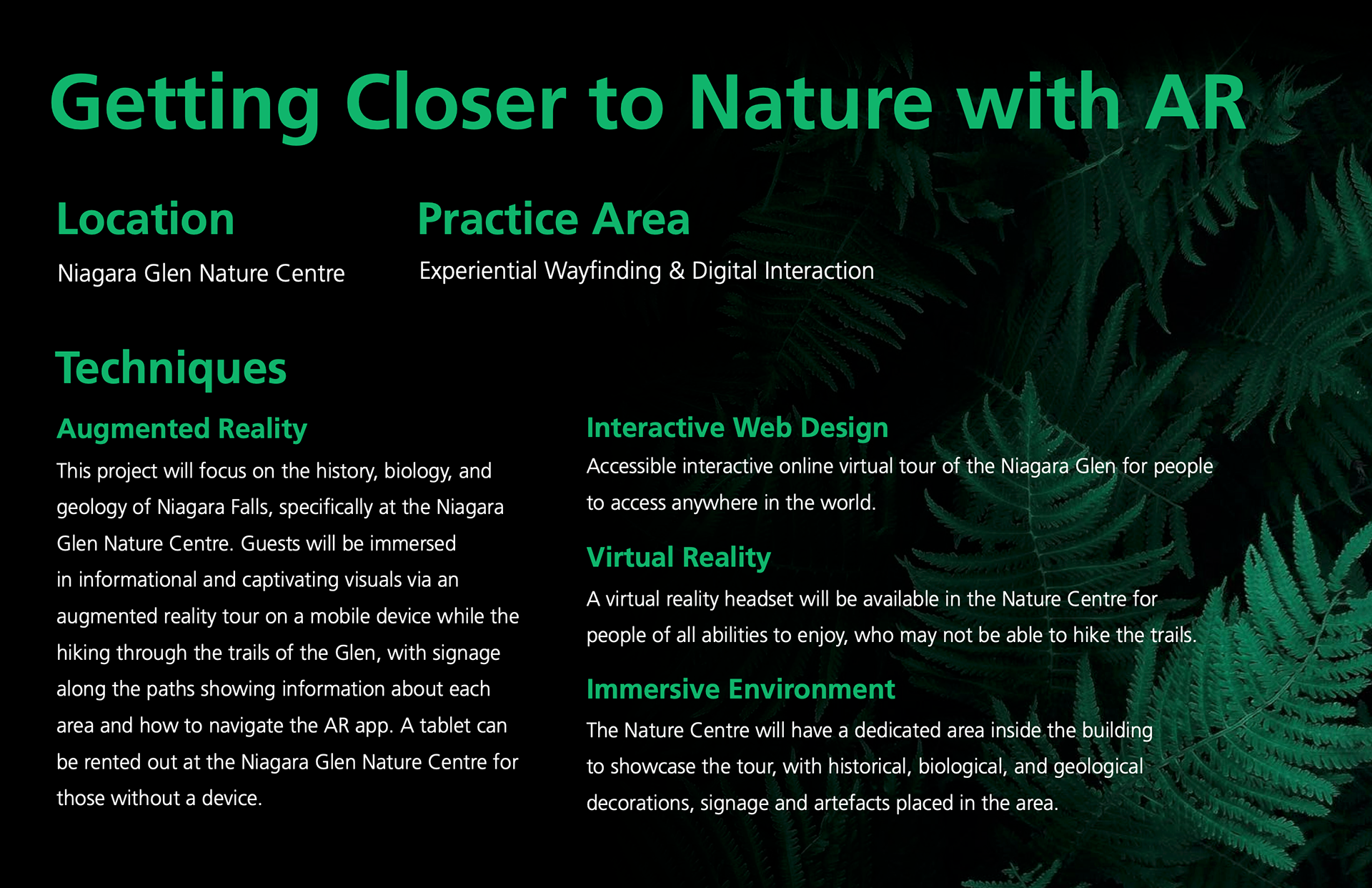
Visitors scan QR codes placed along the trails to trigger Augmented Reality animations on their device. These overlays provide engaging visuals related to the site’s history, wildlife, or geology, layered directly over the natural environment.
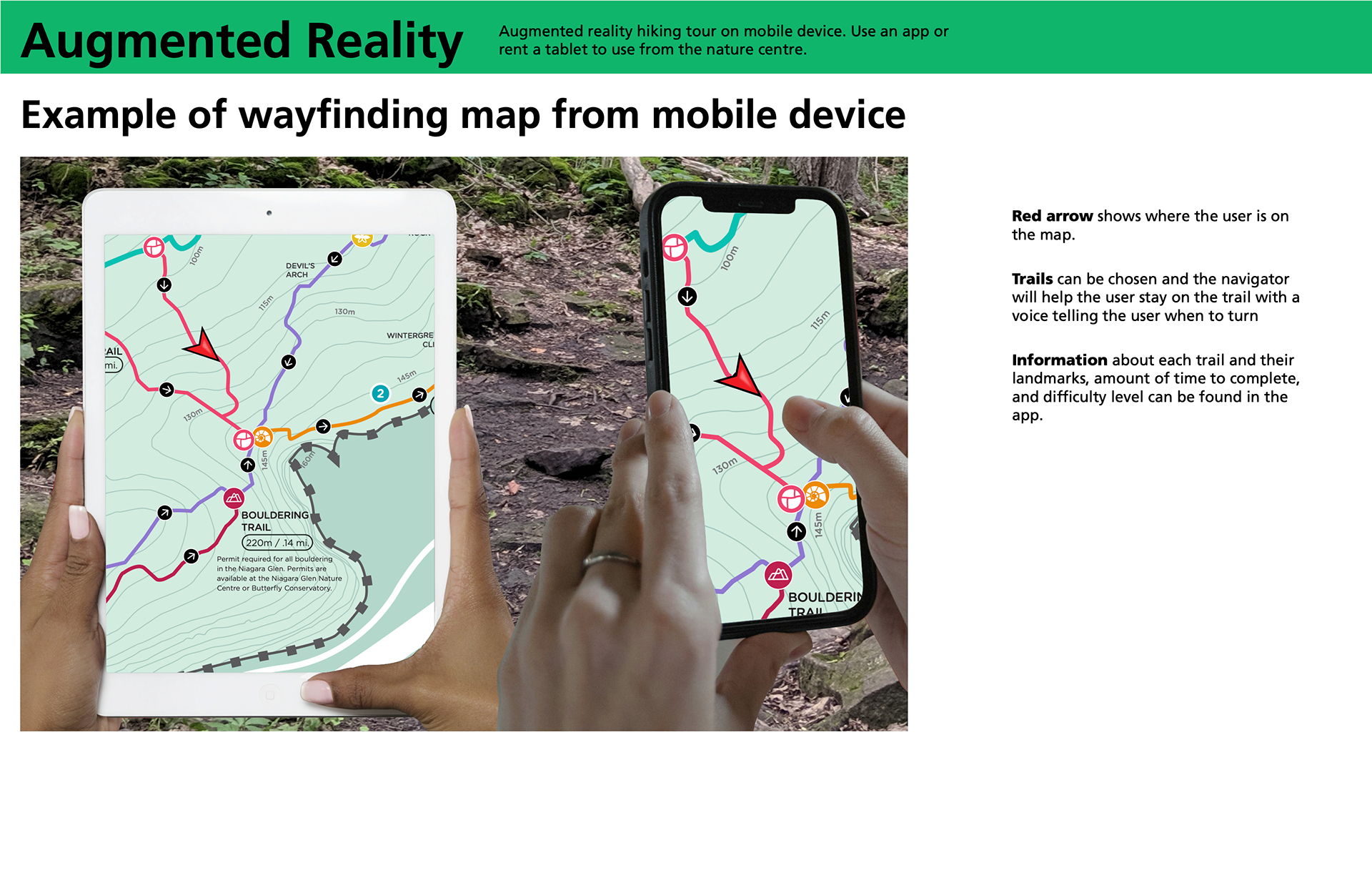
Wayfinding Map in App
The mobile app includes a built-in trail map with AR checkpoints marked along the route. Users can follow their progress, learn about each stop, and navigate the experience at their own pace with optional audio or text guidance.
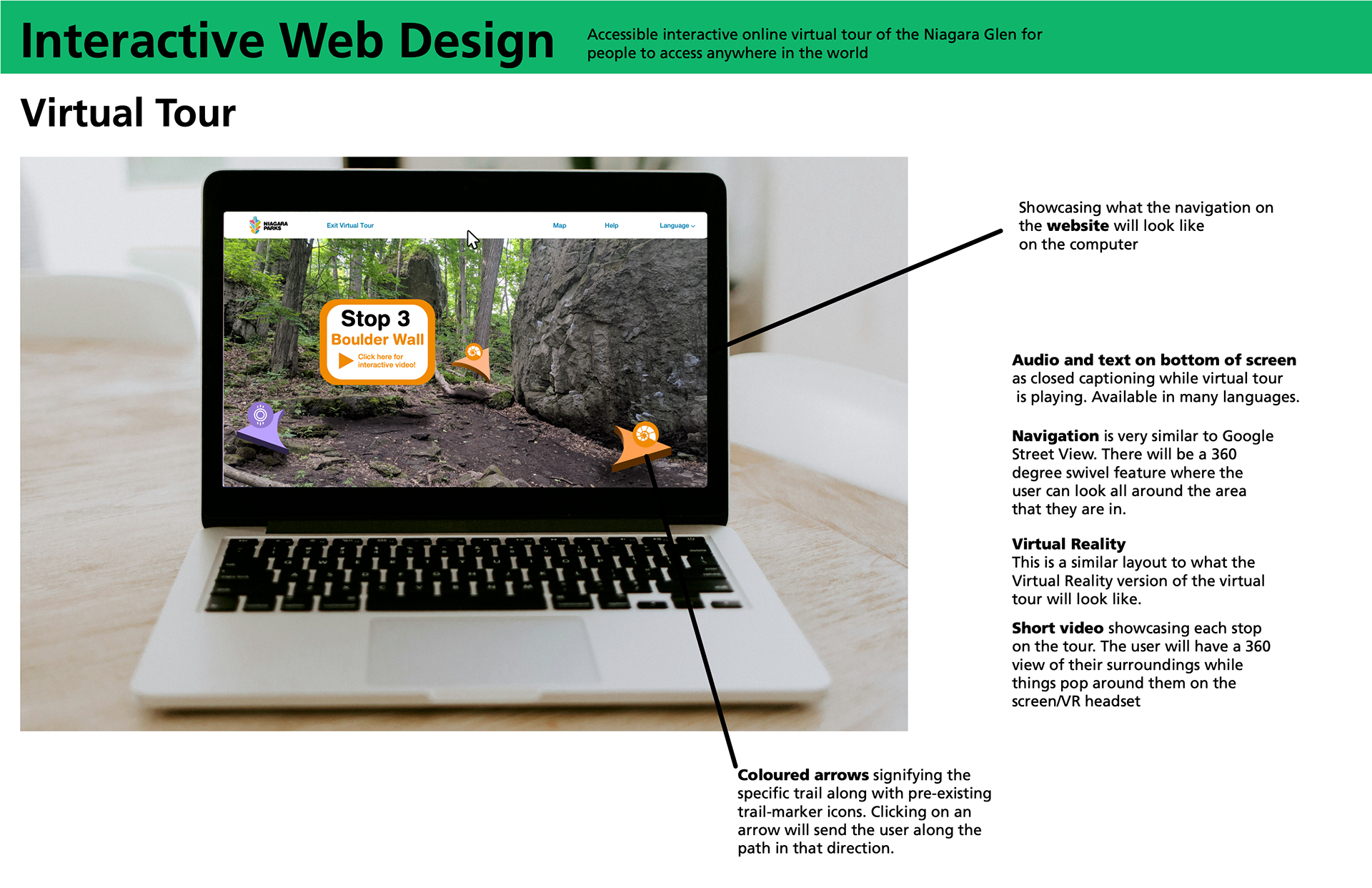
Virtual Tour Experience
The interactive web tour brings the Niagara Glen to life for remote visitors, offering immersive visuals and educational content accessible from anywhere in the world.
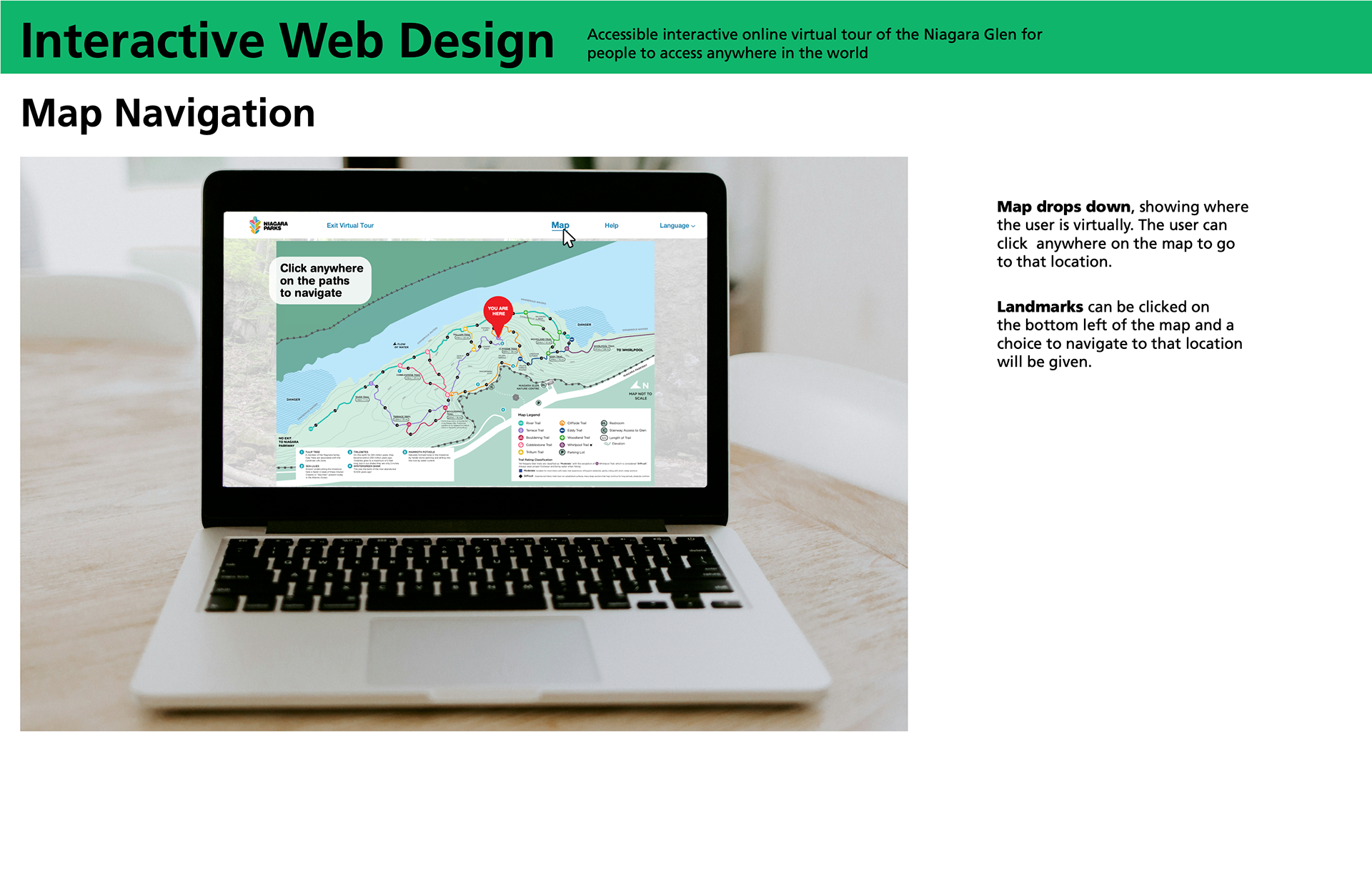
Map-Based Navigation
Users explore the virtual space through an interactive trail map, clicking on marked points to learn about the Glen’s geology, wildlife, and history at their own pace.